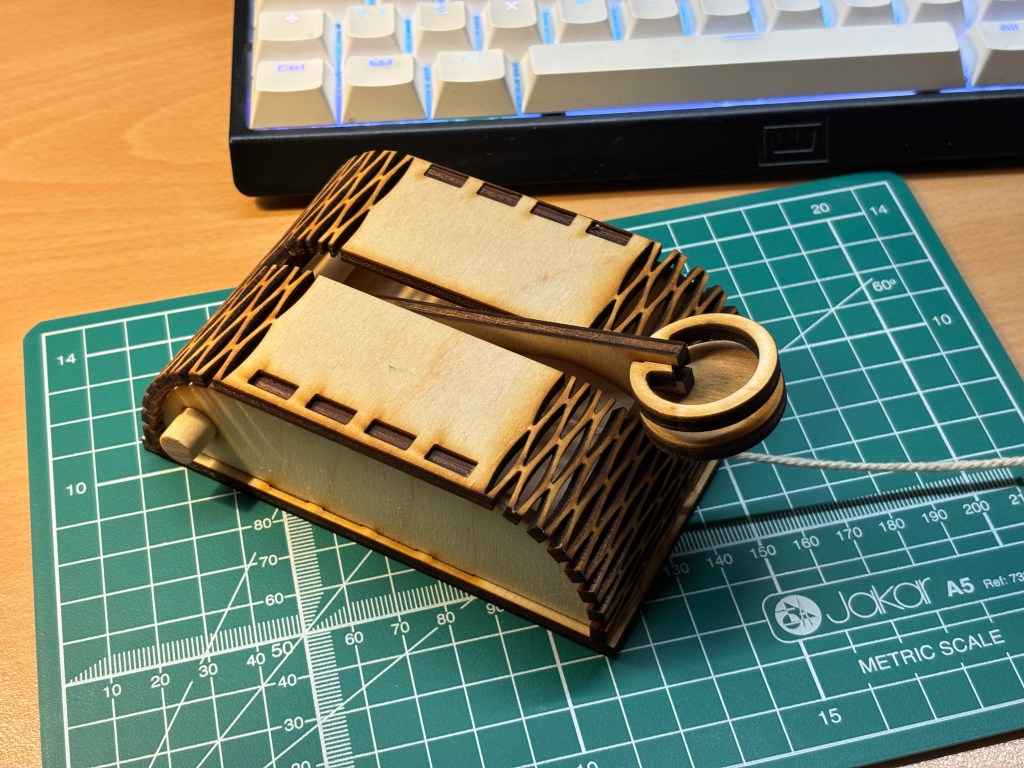
A 2 player catapult game, will you defend your castle?
A laser-cut catapult with a small metal ball to fire at laser-cut building blocks from a set range; this project was a designer industry orientated look at market competition, laser cutting techniques, moving parts, and game design.
Over the course of 4 weeks, I iterated on the design with prototypes and experiments, exploring different kerf-hinge joints, laser cutting rasterisation, and precise drawing in Rhino 8.
I was also tasked with creating both an instructions page, and also a poster that made the game look exciting – both of these tasks massively improved both my skills and confidence with Adobe Photoshop and Adobe Illustrator.
Brief
Design and prototype a toy/game, which is to be manufactured using laser-cutting processes and techniques aiming to use one sheet of 760mm x 440mm laser ply. Use sustainable design methods and principles to ensure that your toy design minimises environmental impact. This can be achieved via the restricted use of materials, it’s potential for recyclability and repairability, as well as its use of energy, during manufacture, distribution and use.
Specifications
- Toy/Game must include motion.
- Toy/Game must use the technique of kerfing in its manufacture.
- Toy/Game must be for a min of two players.
- Toy/Game prototype must be laser cut and aim to use one single sheet of 760mm x 440mm ply*.
- Toy/Game must use sustainable design principles.
- Small amounts of other materials/fixings are allowed. Speak with Tracy regarding this.
The build process had it’s ups and downs; the actual assembly of the catapult and game pieces once I had laser-cut them and accepted the use of glue was swift and fun, while working out joints in Rhino was extremely laborious.
A friction in the design process was that I wasn’t entirely sure what thickness of plywood I would be cutting into, which made designing precision interlocking joints almost a headache.


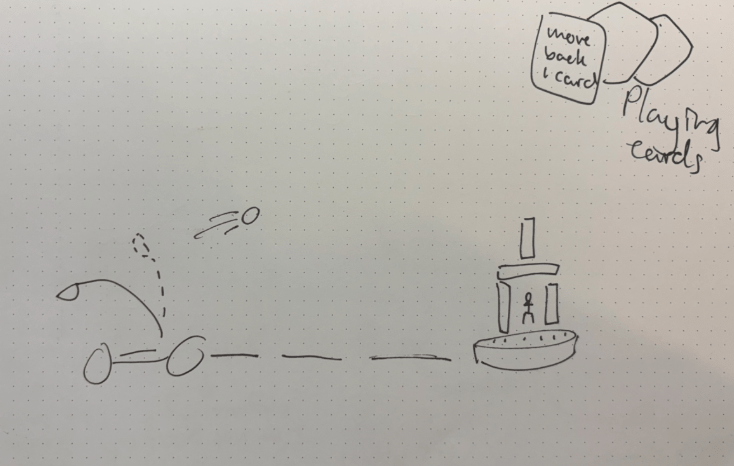
The game is inspired by the Flash game: “Crush the Castle”. A game I played I played in school, similar to angry birds.
More detail on Crush the Castle
Crush The Castle is a very old Flash game I have fond memories of playing at the back of the class when we were working in the computer suite at school.
The gameplay was similar to the popular mobile game “Angry Birds”.
The player would control a catapult that would launch various projectiles with the aim of toppling a variety of castles, hopefully defeating the enemy king within.
The idea of a two player crush the castle board game already sounded like so much fun, and I immediately loved the concept.
An attacking player and a defending player also sounded like a very unique gameplay style as a board game, and I was excited to have found a game that I believed would be genuinely fun.
Cardboard Prototype

The next step was to build a cardboard prototype, while drawing a well thought out plan.
View

Building the cardboard model was hugely helpful for taking into account various aspects of the design that I didn’t consider, such as where to put extra support, and aesthetic ratios regarding form.
Kerfing Tests
To me, kerfing is a remarkably beautiful technique, and one that I wanted to delve deeper into while I had the chance. I wanted to experiment with various patterns, to see how they would perform.
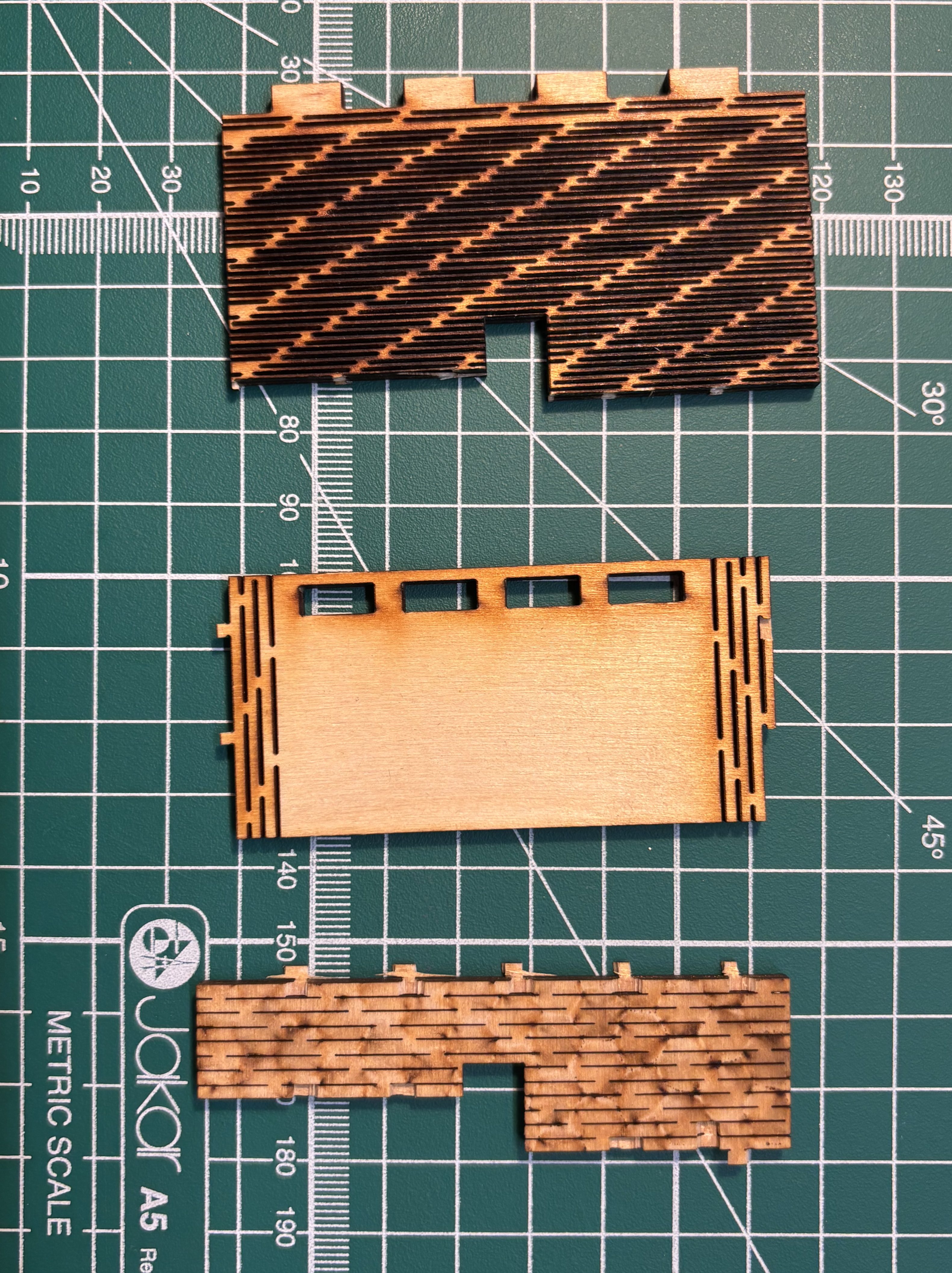
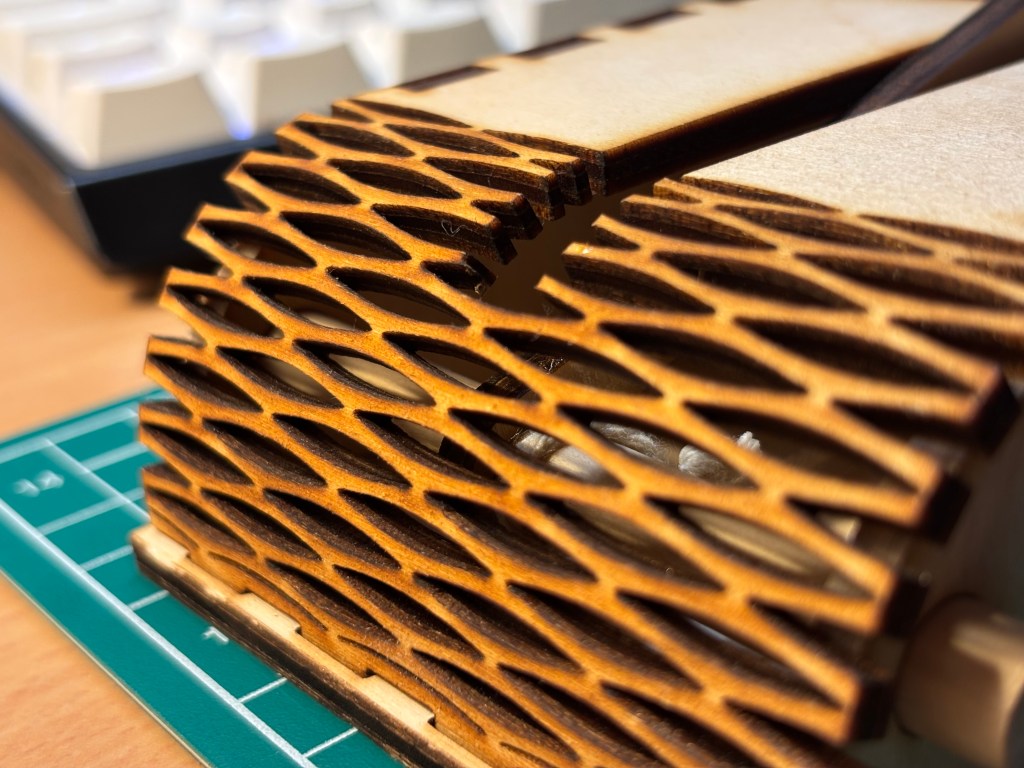

Only one pattern survived the 90º bend the catapult required.
To my surprise the best performing kerfing test was an original design consisting of an off-set grid of cut out ovals, rather than the recommended thin slits.
Personally I believe this pattern to be particularly beautiful.
Laser-cutting and Assembly
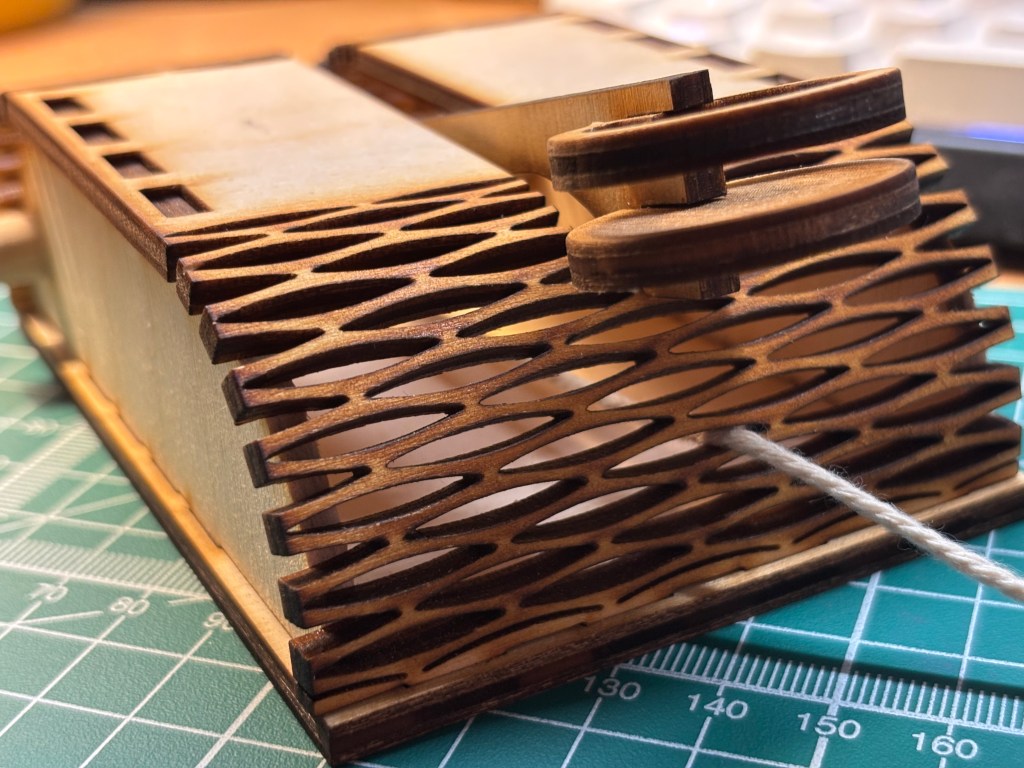
The building process went smoothly, using wooden dowel for the axel of the catapult, and small spots of glue for attaching the string and handle.
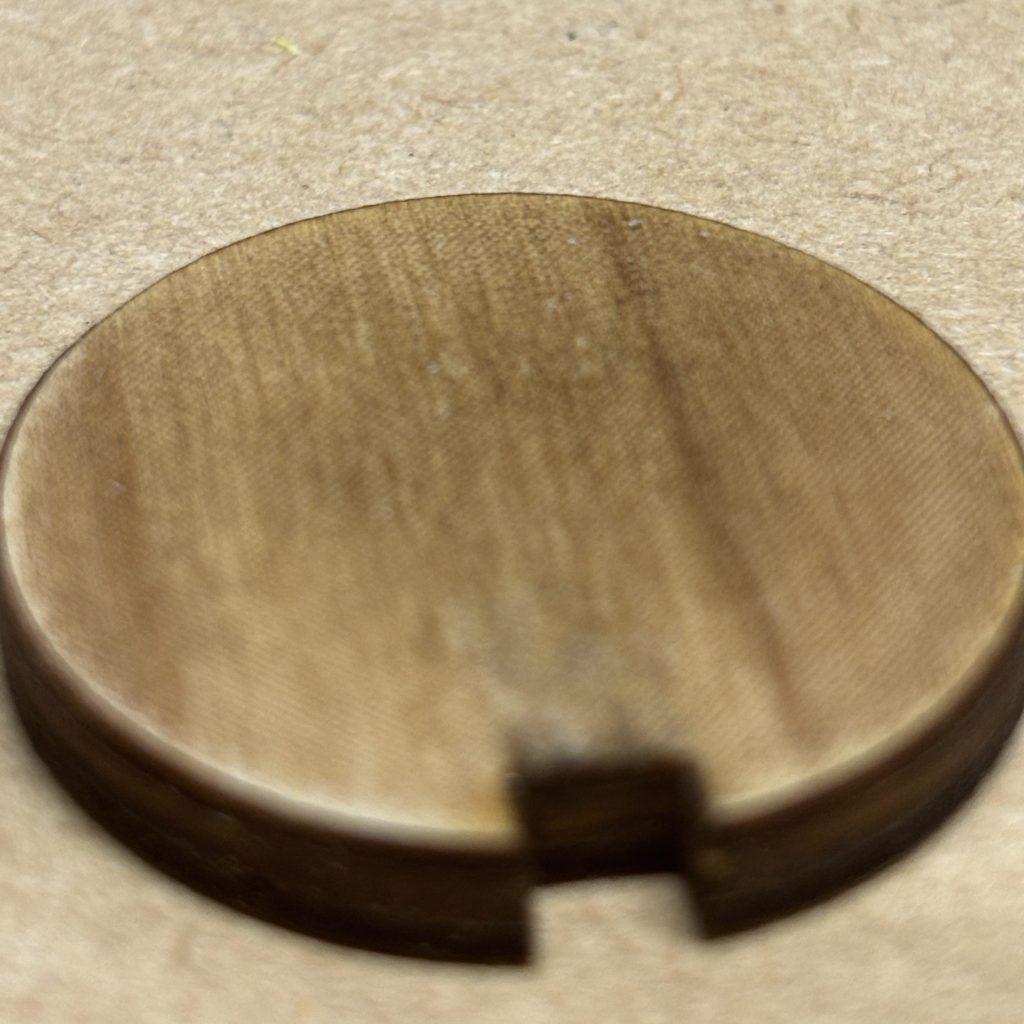
The holding platform for the metal ball bearing that is to be launched, has a subtle rasterisation technique done by adjusting the laser cutter in such a way, that it engraves a concave imprint into the wood. This would help centre the ball to increase accuracy.

The kerfed top cover of the catapult is symmetrical for easier construction, however the catapult arm doesn’t actually require the additional allowance, since it is curved to snugly fit the original curve.
Rules and Play Testing

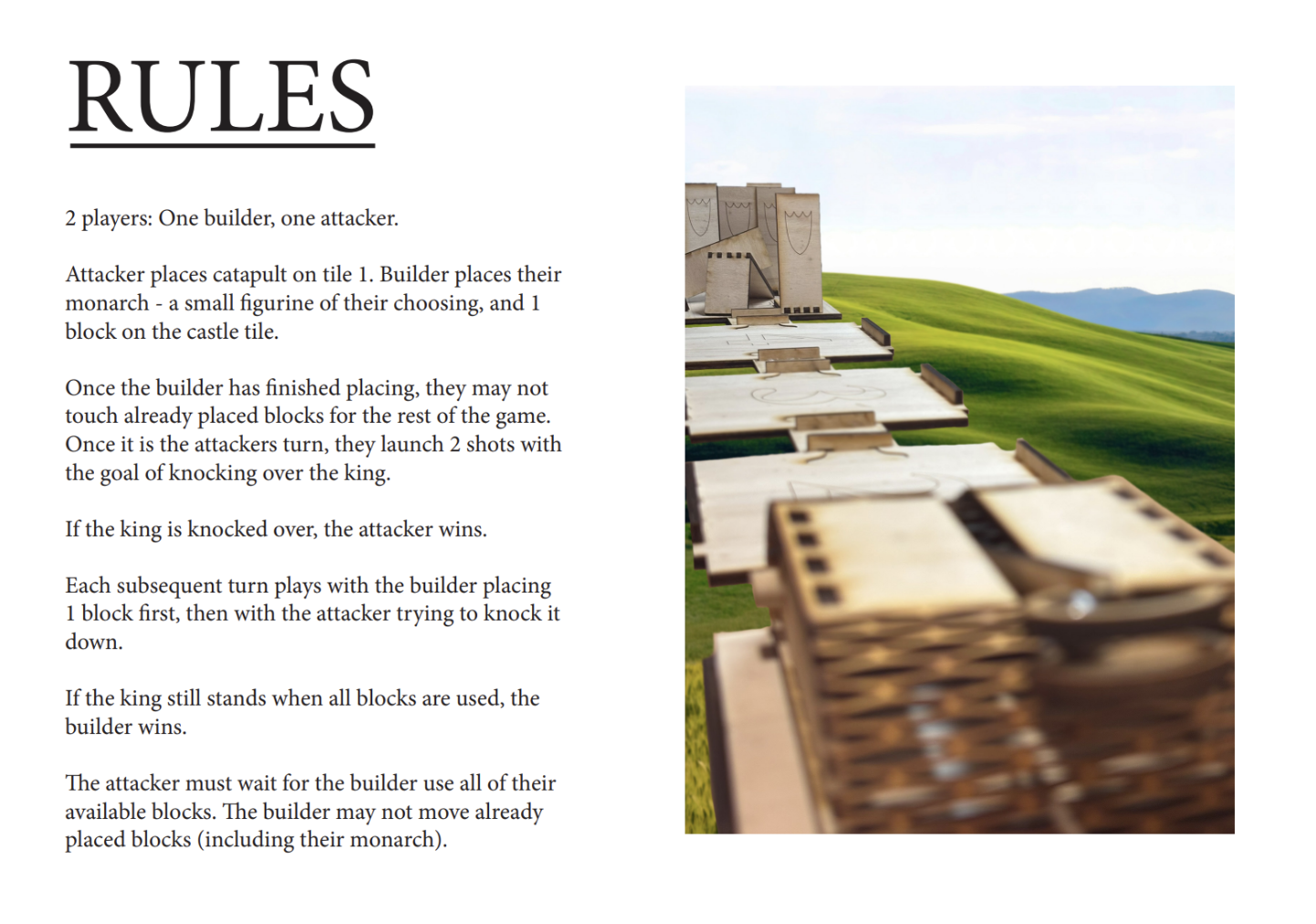
After play-testing with my family, I found that the action cards were really just an unnecessary distraction from the game, and that the gameplay was actually better with simple, constant rules.
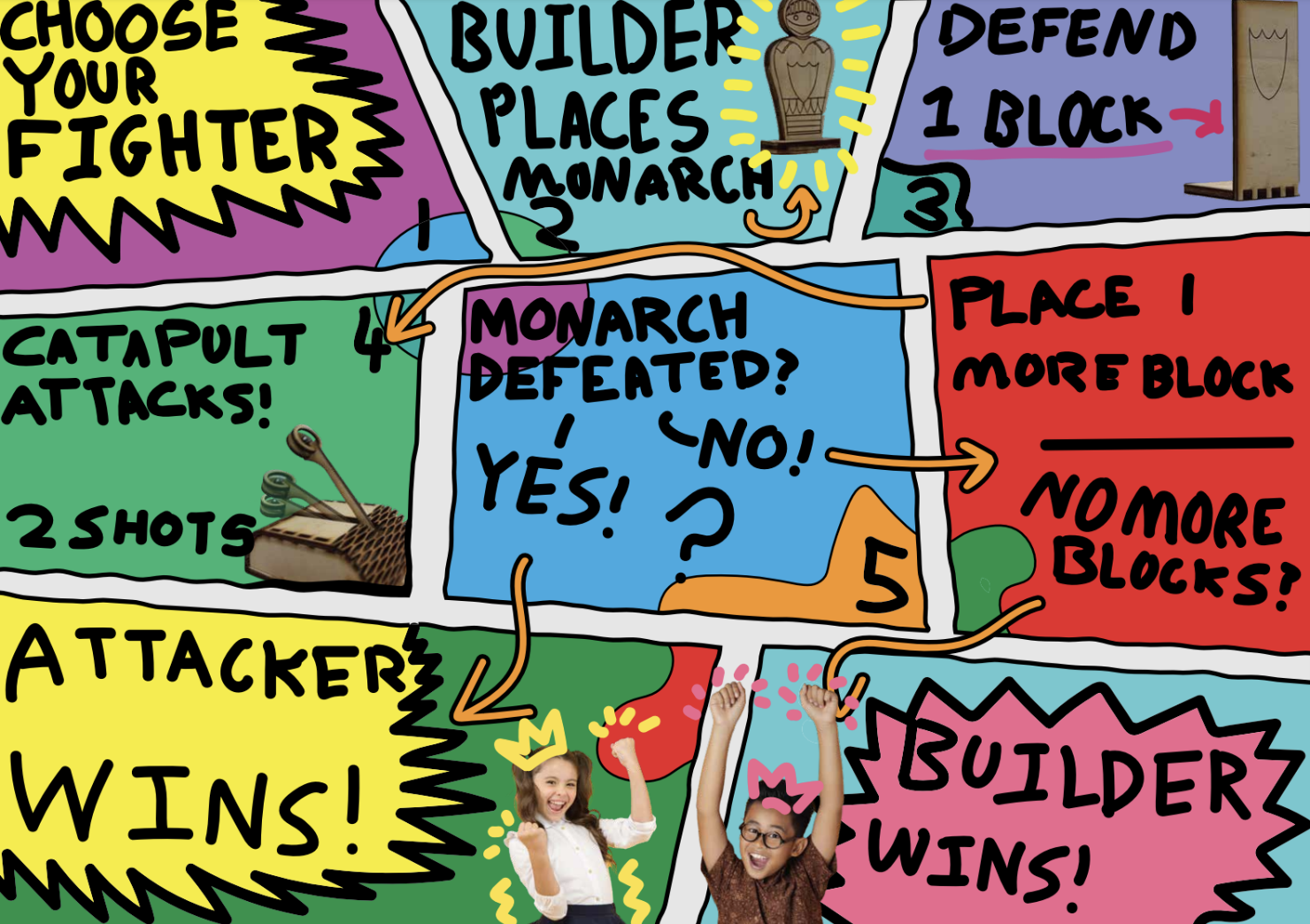
The new rules of the game would simply be “builder places one block, attacker launches two shots, repeat”
This will make the game rules much simpler while even improving the some gameplay elements. Simplified rules are also easier for young children to understand.
Posters
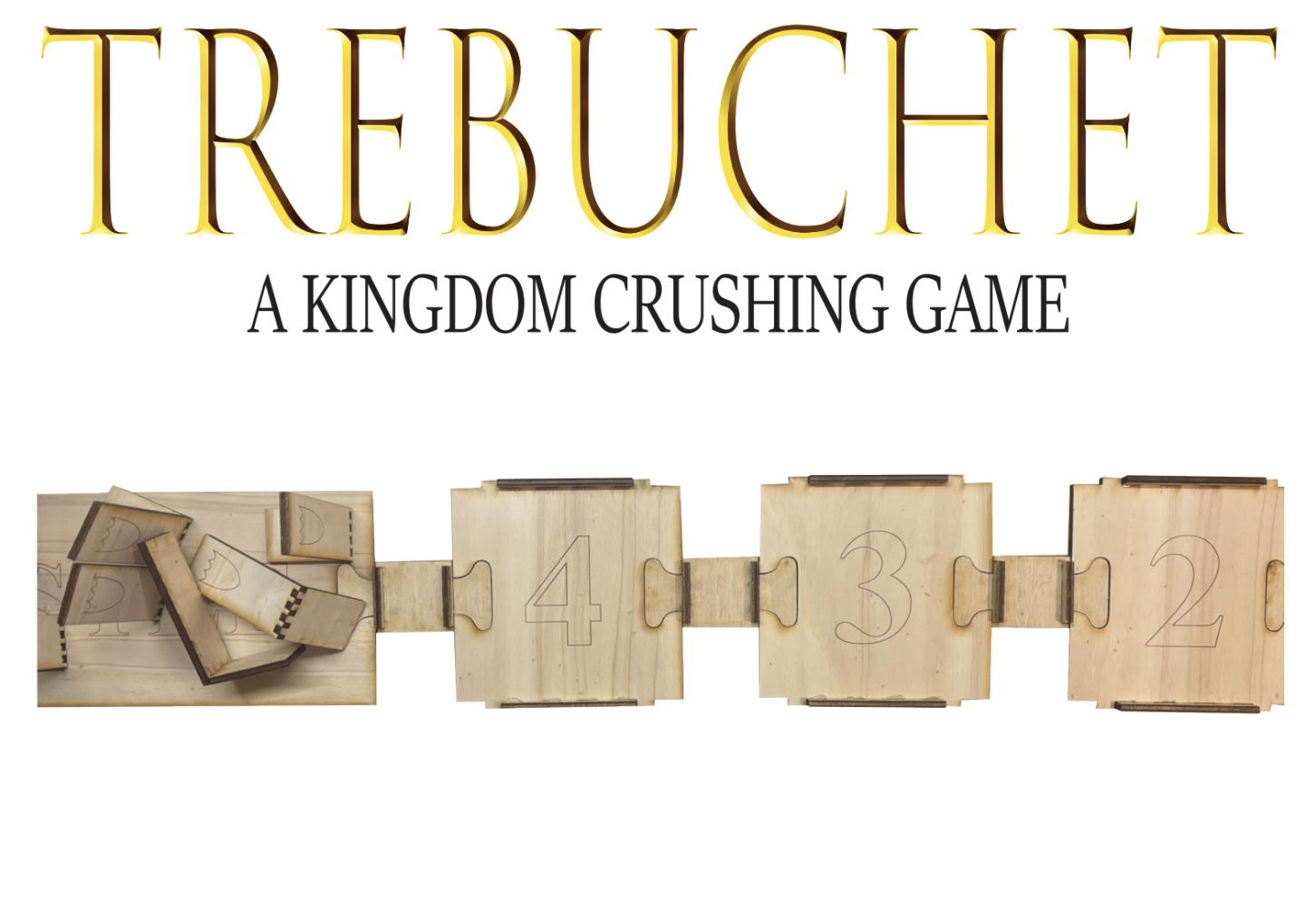
My first draft of presentation sheets were unsatisfactory, since they were made quickly to be in time for the presentation.
I later went back and remade them in InDesign, and there is now a significant improvement in the quality of the work.
Here are the old presentation sheets, with the new ones on the next two slides.
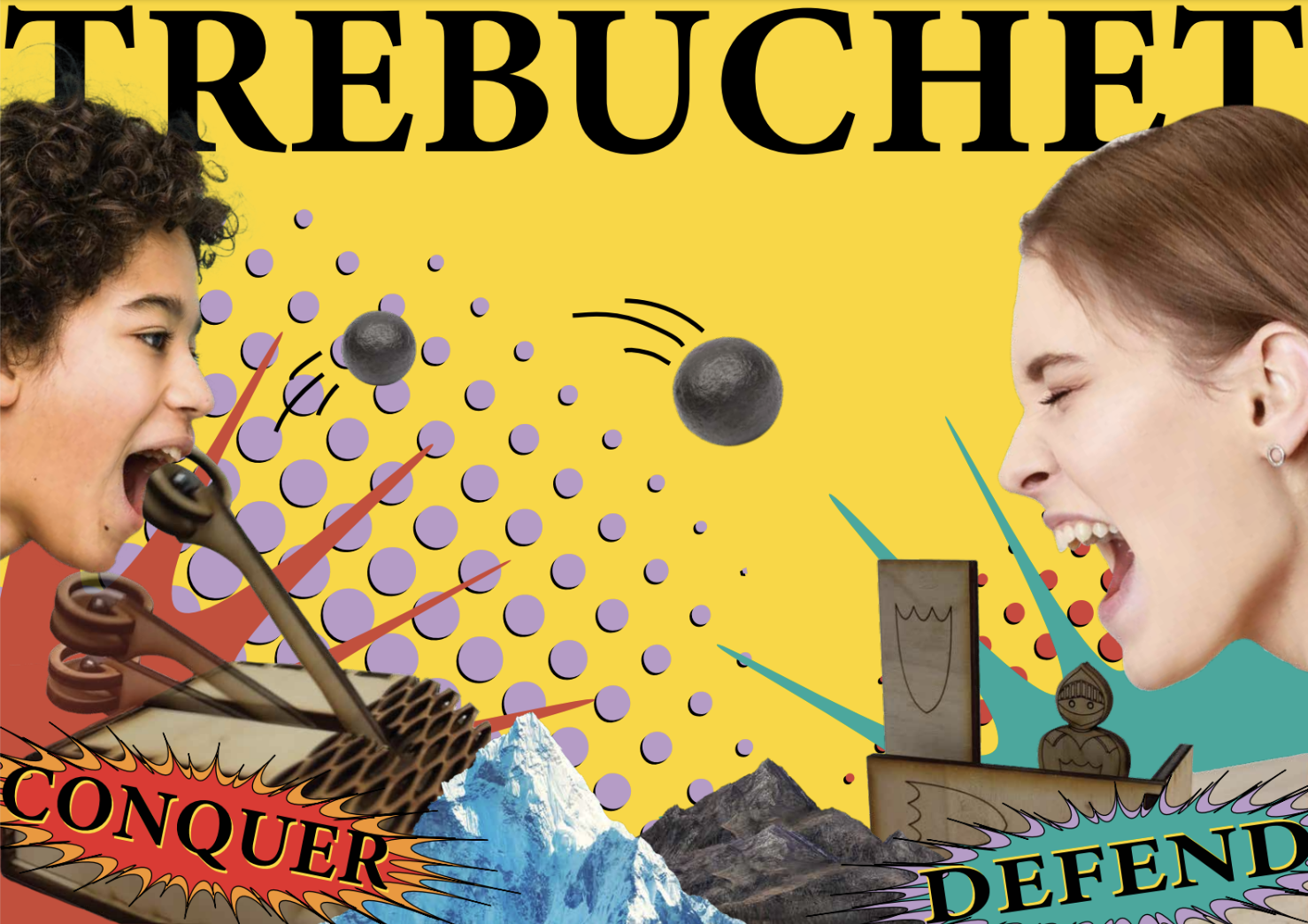
The new poster are flashier, more interesting, and just generally more skilfully made.
Final Thoughts
- Game Design 7/10
- Could have used more play testing, however the unique dynamic is very fun and novel, while the constraints of simple building blocks allow for almost endless possibilities and replayability.
- Object Design and Build Quality 8/10
- The catapult is beautiful; it’s design and final build quality is to an extremely high standard. When shown to family, they initially thought nothing of it, but only because they had assumed I had bought it as a gift for someone. The small details in the catapult such as the handle, and the overall form, really elevate the entire project. The catapult feels sturdy, yet delicate and precisely manufactured. With all the focus on the catapult however, other areas fell through the cracks. The base plates lack detailing other than just numbering, and the final plate should – in hindsight – have had a guard to catch stray shots from the catapult.
- Presentation Sheets 6/10
- While a significant improvement on the previous posters, which were maybe a 2/10, there are still some key details that could be improved upon. The main factors holding the posters back are the placement and z factors of the faces, having more visual importance than the catapult itself. This, along with difficulties in colour coordination, and empty spaces due to mediocre composition, keep the poster from reaching the heights they should.
- Overall 7/10
- While overall, the standard of the project was perhaps around a 5/10, the catapult alone bring it to a 7/10. Even though I made mistakes along the way, mostly in the form of time management, and division of my attention, I can be proud of the final result because the catapult is beautiful.
Other Notes
Other possible ideas
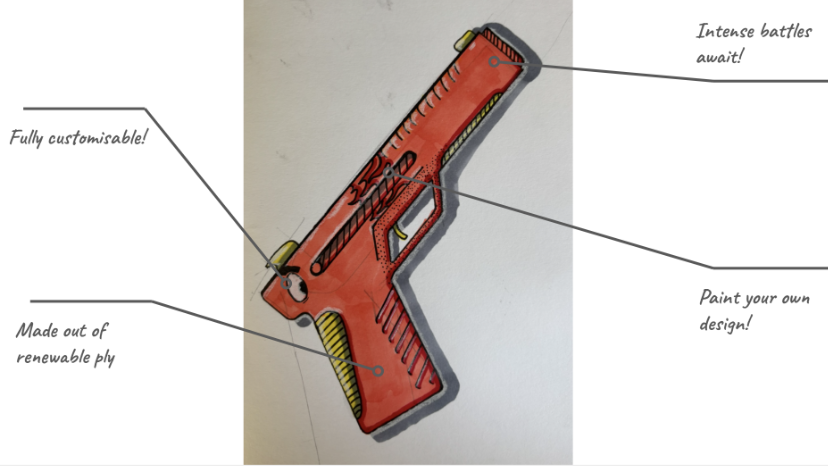
We were told to come up with a few ideas for the games, however the first two designs I came up with weren’t very good. One being a toy gun, and the other being a game that already existed.

Researching Competitors
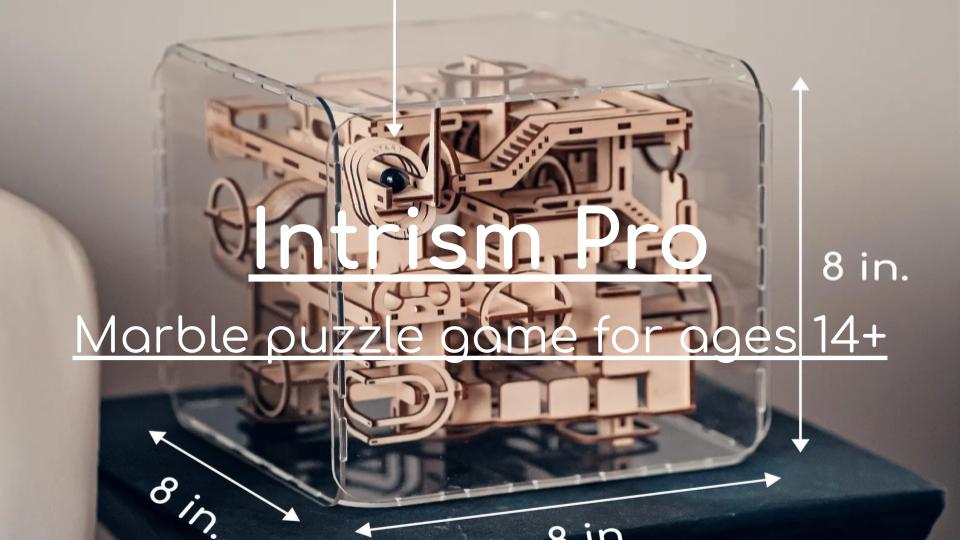
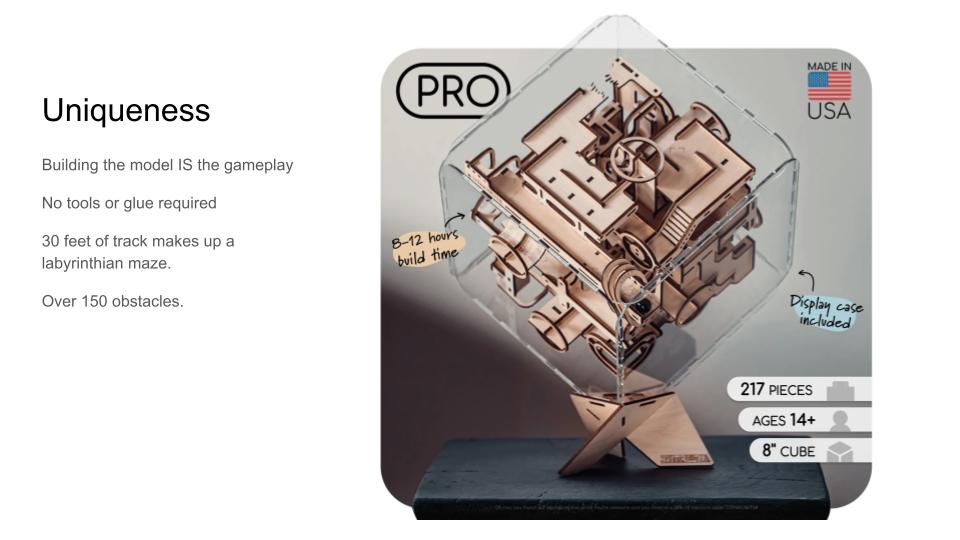
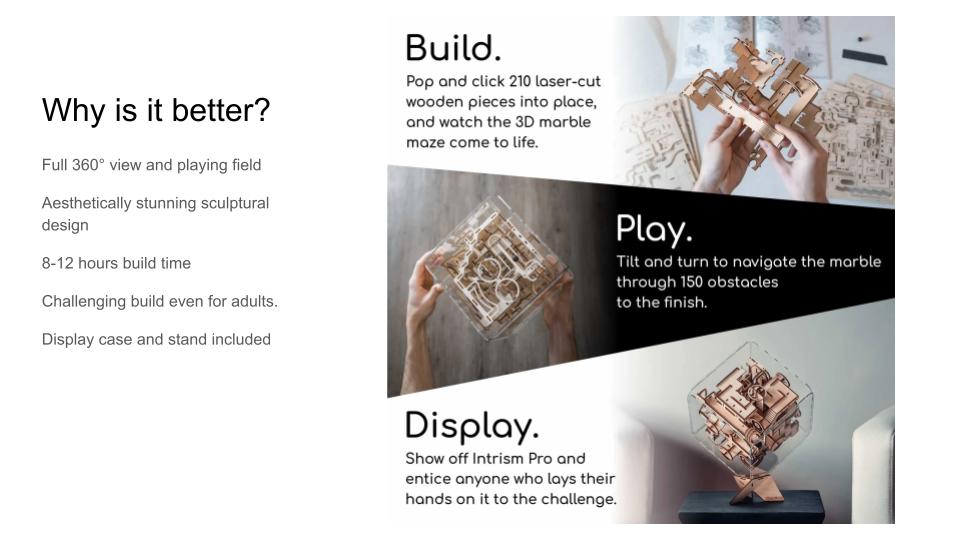
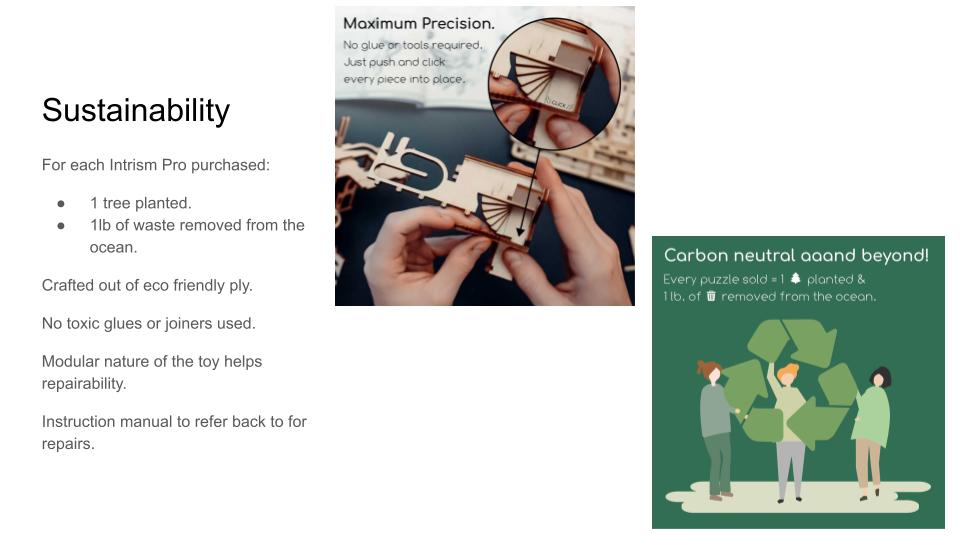
Part of the research side of the designing process was researching competitors. We were assigned pairs and made a presentation about the “Intrism Pro”.
I tried searching for other physical games like the one I had decided to go with – crush the castle, but in real life – but I couldn’t find anyone making anything even remotely similar; my product was entirely unique.
 Raphael Murray Browne