Discovery was split into two parts: Designer for Industry and Designer Maker. This half was designer maker, focussing on building technique, quality, and philosophy.
This project did not turn out as planned, but while I am not happy with the final result, it provided me with many valuable learning experiences.
Brief
For this project, we were required to create an object, and multiple zines, as an exploration of fixings and joints.
The zines were composed of the 6 best photographs of the 100 we were to take around the city. These would inspire our final object.
We were to using cardboard, and to experiment with different ways of joining the material to create an object that would hold food.
The choice of which food was ours to make.
We were not permitted to use glue.
Zines
The zines were composed of various photographs taken around Plymouth, used as research into fixings and joints. We were assigned to take 100 photographs; marking the start of my downfall, I took only 20.
The zine itself was the bare minimum, however this was my first time using indesign, with 0 previous instruction, so I must take that into account when judging my past work.
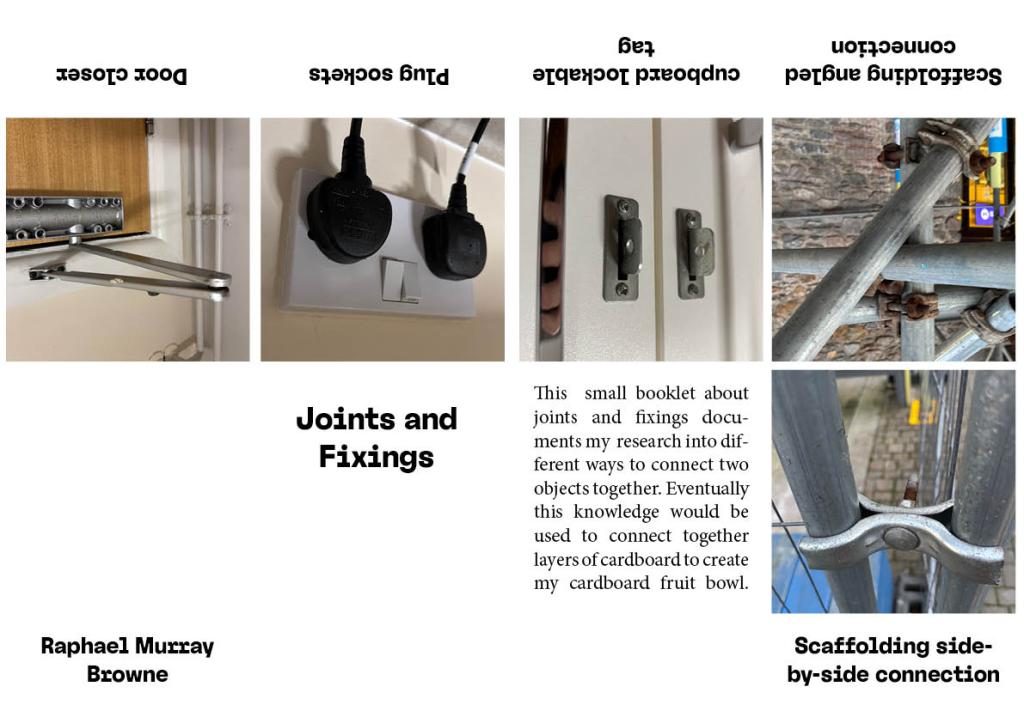
Notes on text
This zine is the latest version, after adjusting my concept to be a fruit bowl instead of a planter.
Initial Concept
My cardboard object was a planter that could be used to grow vegetables – a unique take on the food objective. While the idea of growing vegetables was novel, and taken directly from photos taken around the city, the actual design of the planter was weak.
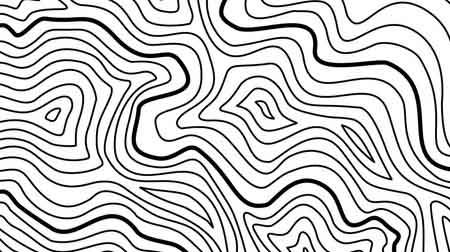
The idea was to have a planter inspired by geological forms and topological maps. Layers of cardboard separated by small fixings, laser cut to lock together with the layers.
The main issue with this, even conceptually, is that the layers would be weak to sliding, so the holding the heavy dirt would be difficult. The layers would be separated, so some kind of cover would need to be used to keep the dirt in; not an insurmountable problem, but a difficulty to consider.
Building
I drew out the fixings in Rhino, then laser cut them out. They were shaped like the letter “E”, with two slots to hold the cardboard.
Even though I measured the cardboard carefully, and double-checked the measurements on Rhino, the cardboard fixings did not fit. It was at this point that I should have immediately tried again, or found a different design, but instead decided to mull it over while working on other things; this turned out to be a poor decision.
I managed my time poorly, underestimating how long other parts of the project would take (this included two zines, and a Pecha Kucha).
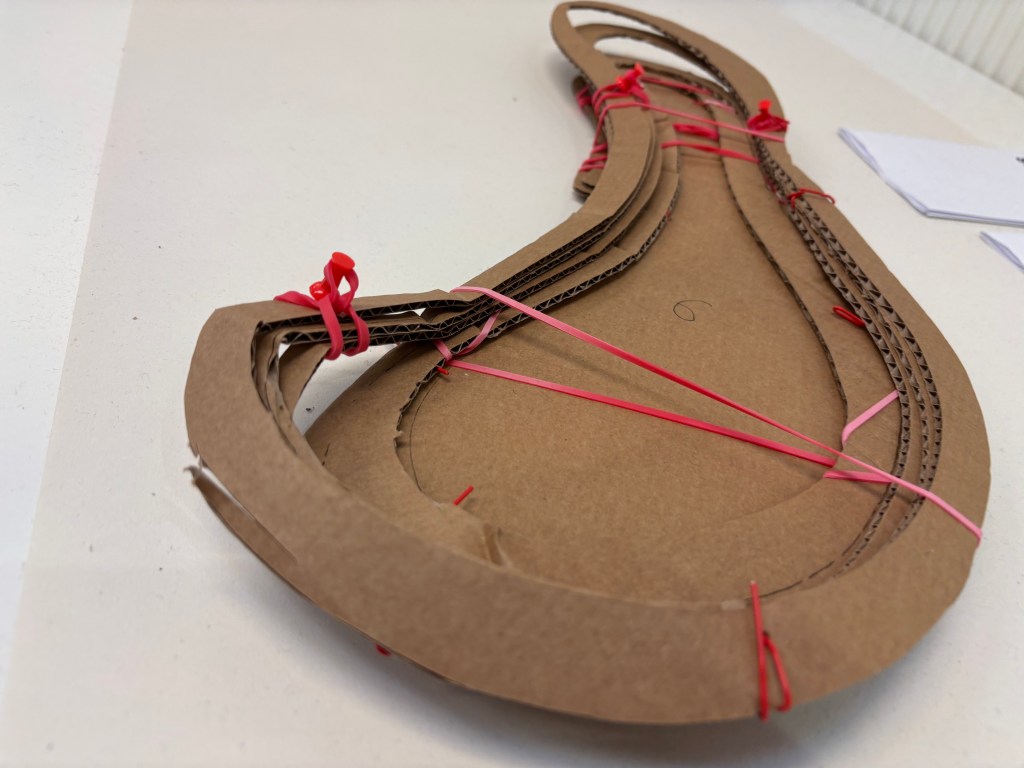
I didn’t have enough time to complete the cardboard model, and found myself sat in front of various pieces of cut cardboard, with no way of attaching them, with every shop that would be selling materials closed. I had to improvise with what I had in my room, and the result certainly reflects the lack of planning.
Time Management
The main issue with this project was, simply put, time management.
Leaving far more than anticipated to the last day, meant I was left doing an 18 hour stretch of solid work, mostly spent on my presentation, that lasted up until 11am.
I did get the piece submitted on time, although I do think I should have presented it without attaching it together, and just left the cardboard loose.
What I’d do differently, given another chance
- Start building earlier – giving myself more time to recover from unexpected hurdles in the prototyping process.
- Experiment more with the joints – this was the focus of the project. I, however, seemed to have been completely glossed over it.
- Simplify the concept – another contributing factor to the poor final result was the complex build. Soon after cutting the “E” fixings, I realised that they would all need to be unique to fit the different levels of cardboard, so this design was flawed from the start.
- Trusted the process – the exploration of joining and fixtures should have guided my object’s design, rather than just having one idea inspired by one image and running with it.
Small Wins
While I would classify the final product a failure, I still learnt some valuable lessons early on, which have helped me in future products.
- Broke the ice with Adobe Indesign, a program with a steep learning curve and intimidating interface.
- Worked under pressure, having done 60% of the project in a single stint the night before the deadline. While a terrible idea, this was good experience and taught me more about my limits.
- Learnt what not to do in later, more important projects.
- Making these valuable mistakes early on, means I can identify the signs of later struggle much more easily, and when it counts.
- I understand and can document the decline in the quality of my work as time went on, and know how much all-nighters suck.
- Learnt to engage more with the point of the project; this wasn’t a particularly difficult project, the struggle came from my own lack of coordination and self-management.
- The presentation, that took up the majority of my time, turned out very well. The entire Pecha Kucha is presented below, although no audio recording is available.
Final
Despite not being proud of the outcome, I can’t deny that this project has given me a plentitude of hard-learnt lessons that will no-doubt help me complete later projects to both a higher standard, and with fewer all-nighters.
 Raphael Murray Browne